



Operations
Internal Operational Systems
Purpose-built systems for the processes the ERP was not built to close.
- Budget & procurement
- Lab management
- Operational portals
Intelligent Operational Systems Above Priority ERP
The ERP records the data. We design and build the layer that connects it to how work actually gets done.

Live in production
Operational Layer · Priority-connected
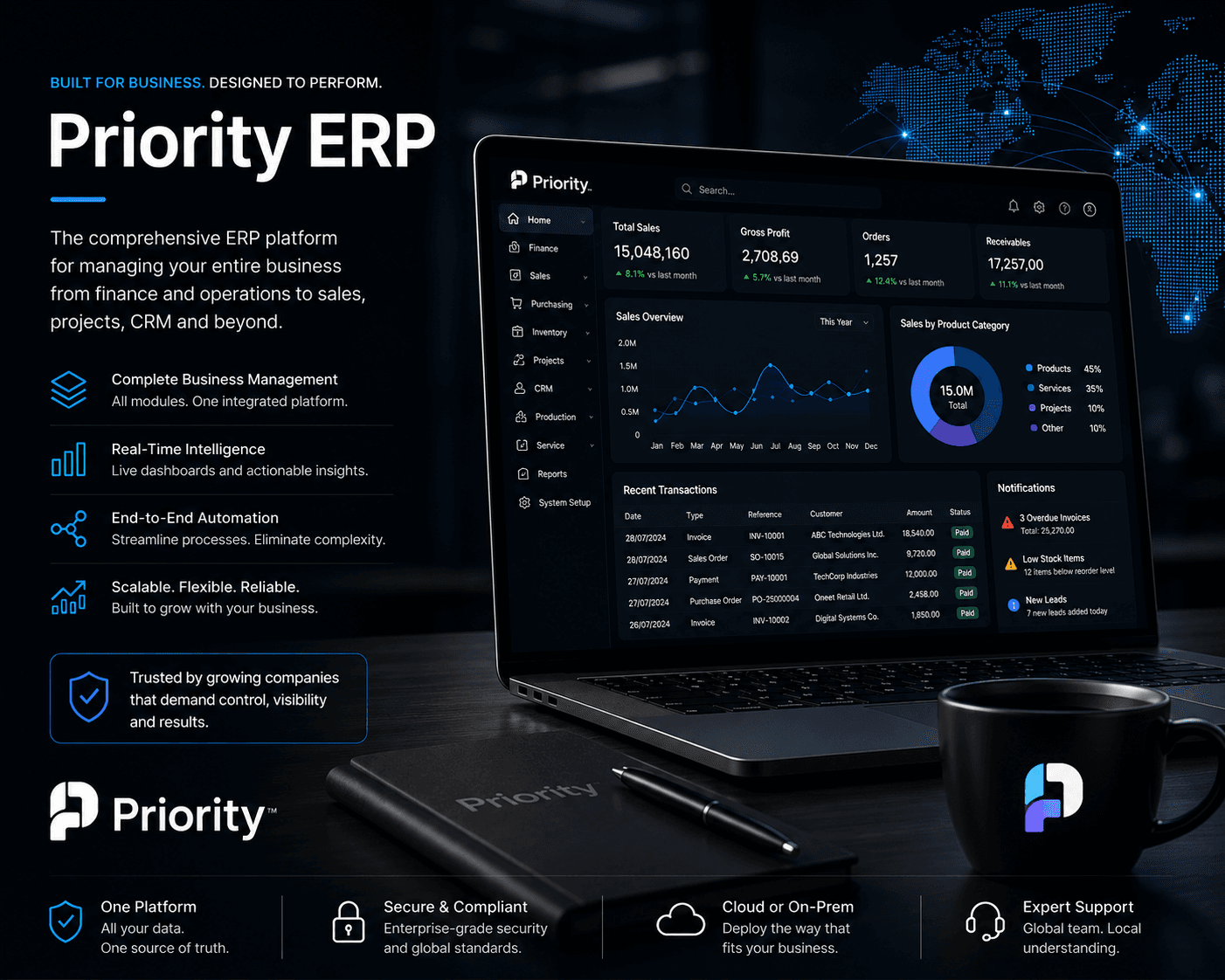
Priority ERP
Records everything — except the exceptions
On the ground
The ERP records. It was not designed to close operational execution alone.
That is exactly what Agile-ERP is built to solve.
The operational story · in one view
 Architecture, Development and Integration
Conceptual diagram: Priority ERP at the centre; around it, an integration and automation layer; around that, Opero operational systems and workflows — request, approval, budget and ERP sync. Agile-ERP is responsible for the architecture, development and integration.
Stage 01 · 01/04
Transactions, documents, and core data live inside it — but they are only the foundation.
What we build
Agile-ERP projects combine Priority ERP implementation, our own systems and products, and purpose-built development — modules, portals, applications and interfaces — selected to fit what each project needs.
Operations
Purpose-built systems for the processes the ERP was not built to close.

Integration
Priority ERP connected to the systems around it — with business logic built in.

AI
An AI layer above your ERP data — surfacing what actually needs a decision.
SaaS
Systems built for one organization become solutions that serve similar ones.
Operational AI agents
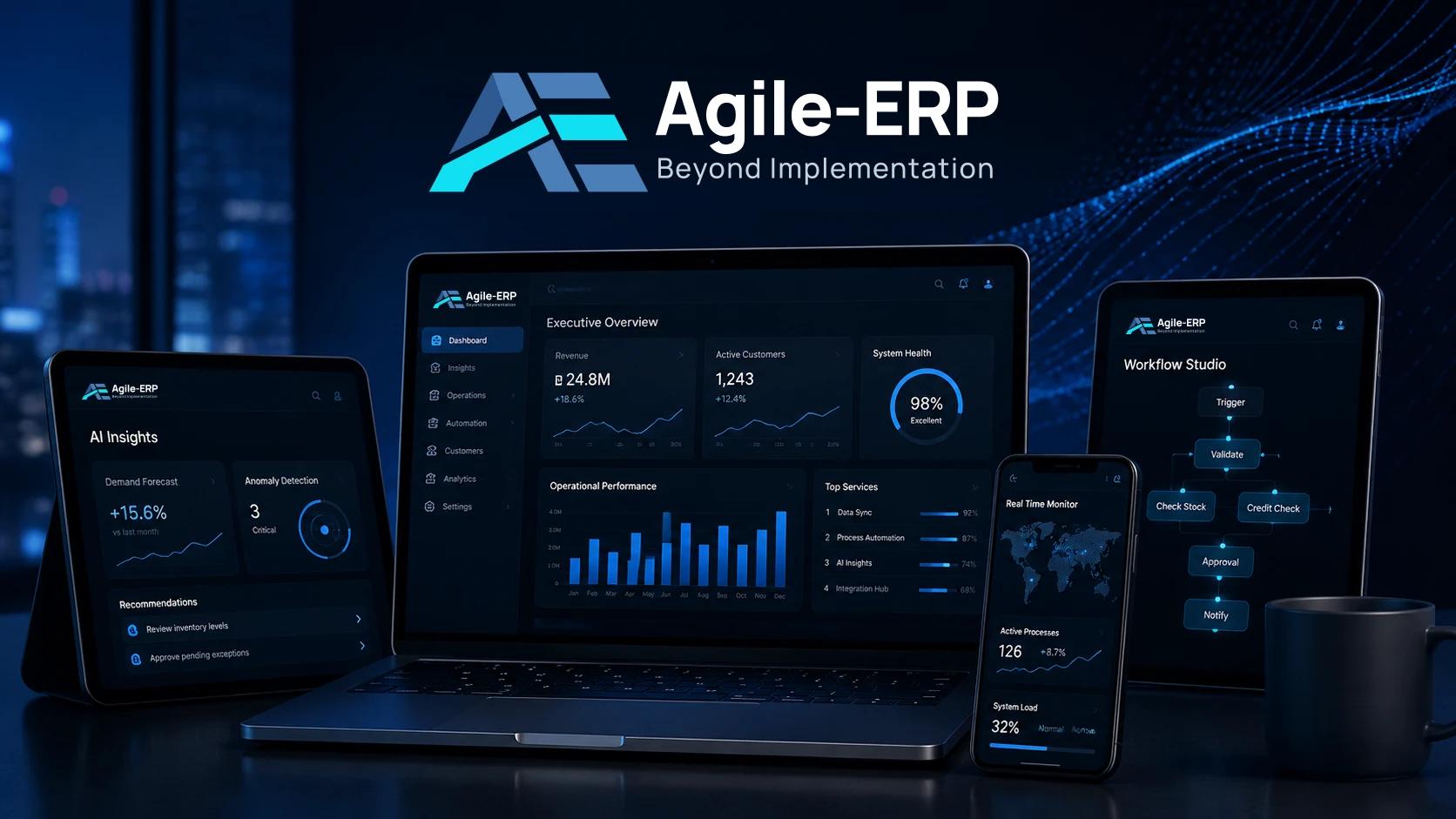
A visual family of AI agents for finance, supply chain, data analysis and workflows — part of the operational layer above the ERP.
Selected Projects
Not claims about capability — three systems organizations run on, above Priority ERP.
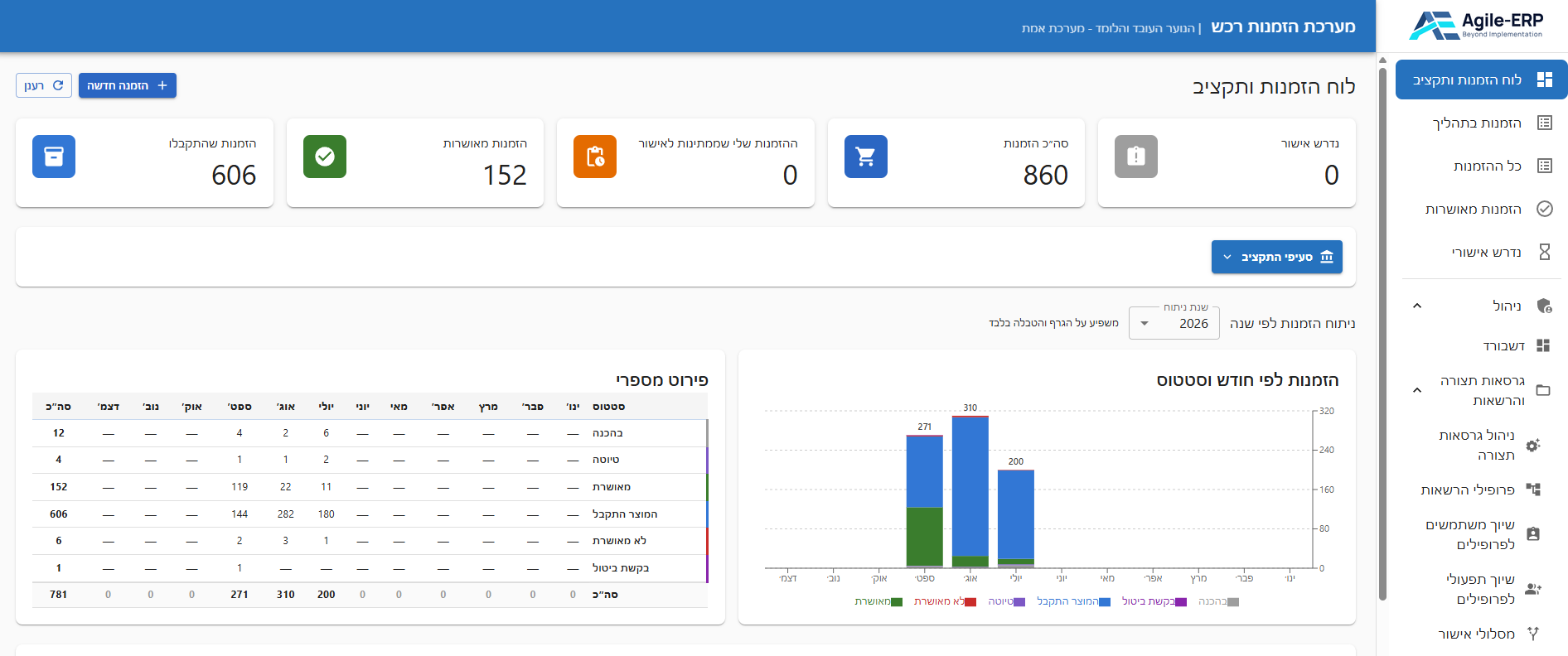

NOAL — The Working and Studying Youth
An enterprise procurement system in which every order is checked against a budget line before it goes out — with about 320 users.
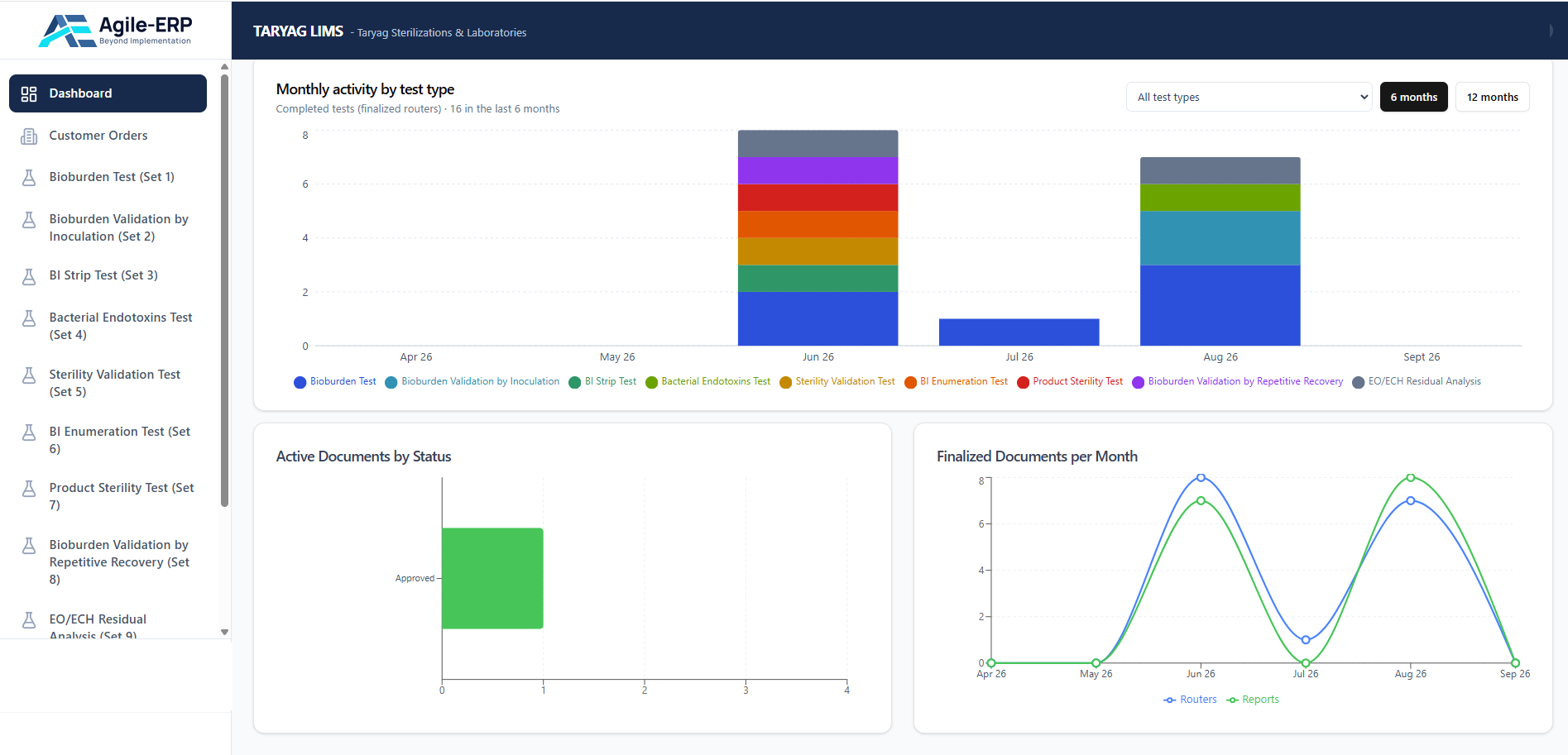

TARYAG Medical
A sterilization and testing laboratory moved from paper forms to a digital system that derives the customer report from the test results themselves — with full version traceability.
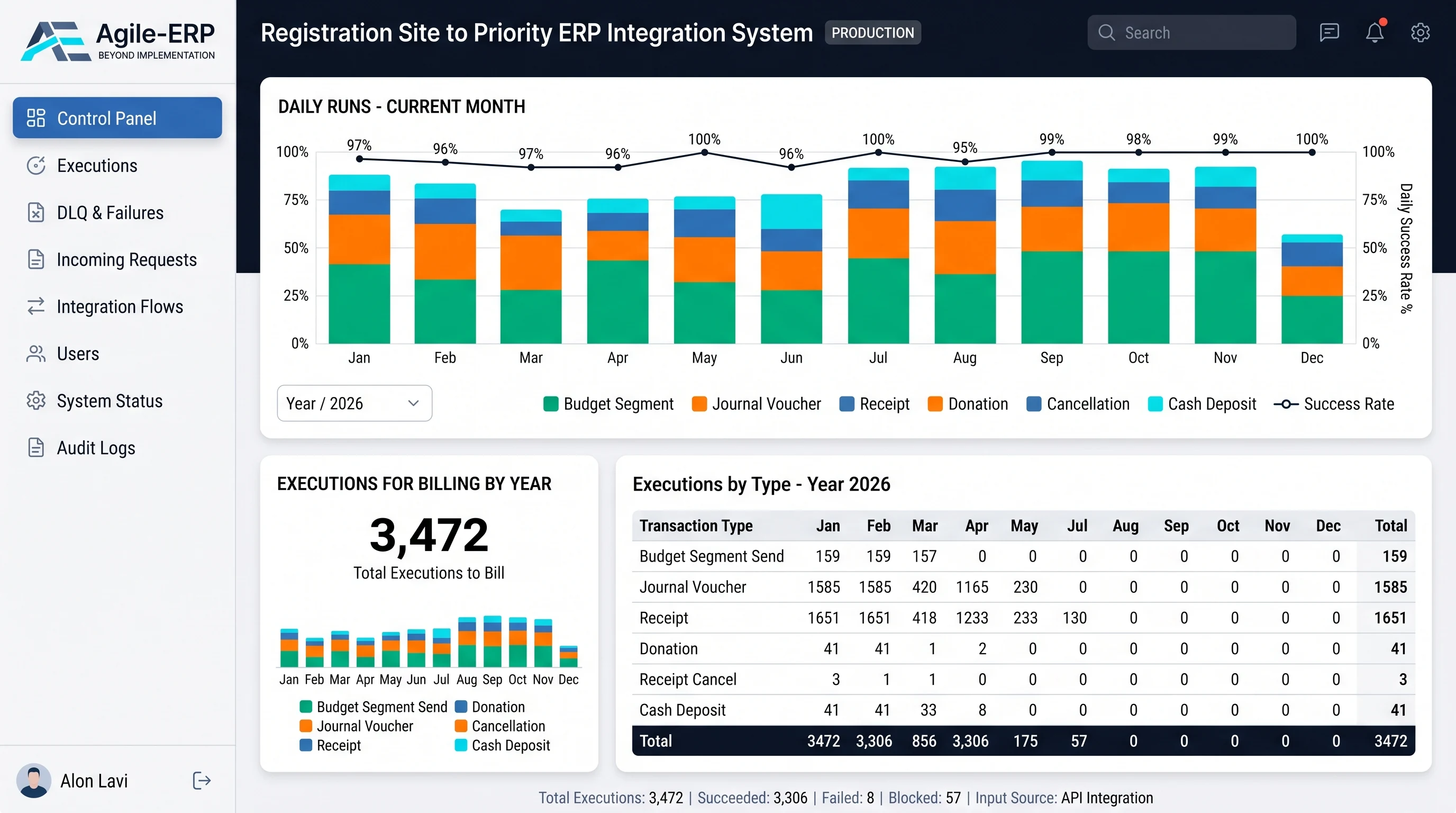
A medical-device group operating several legal entities
A group that chose Priority for finance did not have to abandon the working system it already ran on — a bidirectional synchronisation layer turned double entry into single entry.
Opero Procurement · our procurement product
Orders checked against the budget before they go out, approvals by responsibility and authority, and tracking through goods receipt and the supplier invoice. The official order is created in Priority.
Opero Procurement screenshot · Hebrew interface · Demo data
Voices from the field
Three formal recommendation letters from organizations we work with — in their words, in writing, with names and titles.
From a formal written client recommendation
“The system is very fast, supports a range of controls, and its management interface is convenient and lets the system administrators work independently.”

From a formal written client recommendation
“…procurement processes have been standardized, centralized and digitized; control and transparency have been strengthened; and the day-to-day work of our users has become clearer and simpler.”

From a formal written client recommendation
“Their ability to develop out-of-the-box solutions has been invaluable, ensuring that our needs were met with precision and efficiency.”

Trust
Organizations whose ERP was working well — who came to us to build the missing layer.




And other organizations we work with quietly.
See our projectsBehind the work
A boutique firm. Intentionally small, deeply experienced.
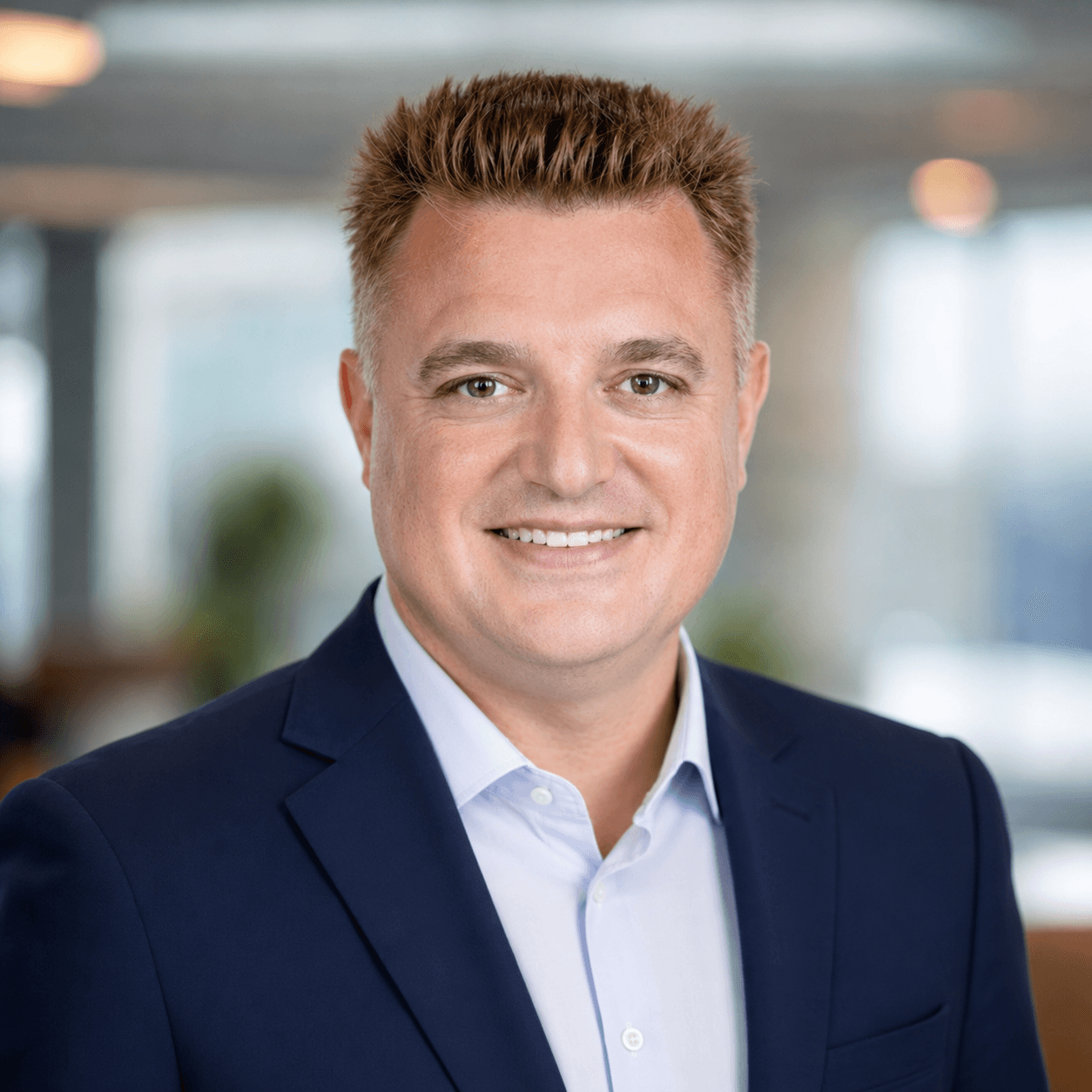

Founder
Founder & Systems Architect
Alon Lavi is the founder of Agile-ERP and a systems architect with more than 25 years of experience across industrial, technology, and global business environments. His career includes roles at Intel, Motorola, and Priority Software, alongside leadership of complex information systems, operations, and integration initiatives.
Today, he focuses on advanced ERP architecture, cross-system integrations, and AI-driven operational layers — combining deep technical understanding, business-oriented thinking, and the ability to translate organizational complexity into precise, deployable systems.
One conversation. We'll determine if this is a challenge that requires operational architecture.
We respond within one business day.